From Decision to First Sale: Opening a Second Hand Shop with UK Stock
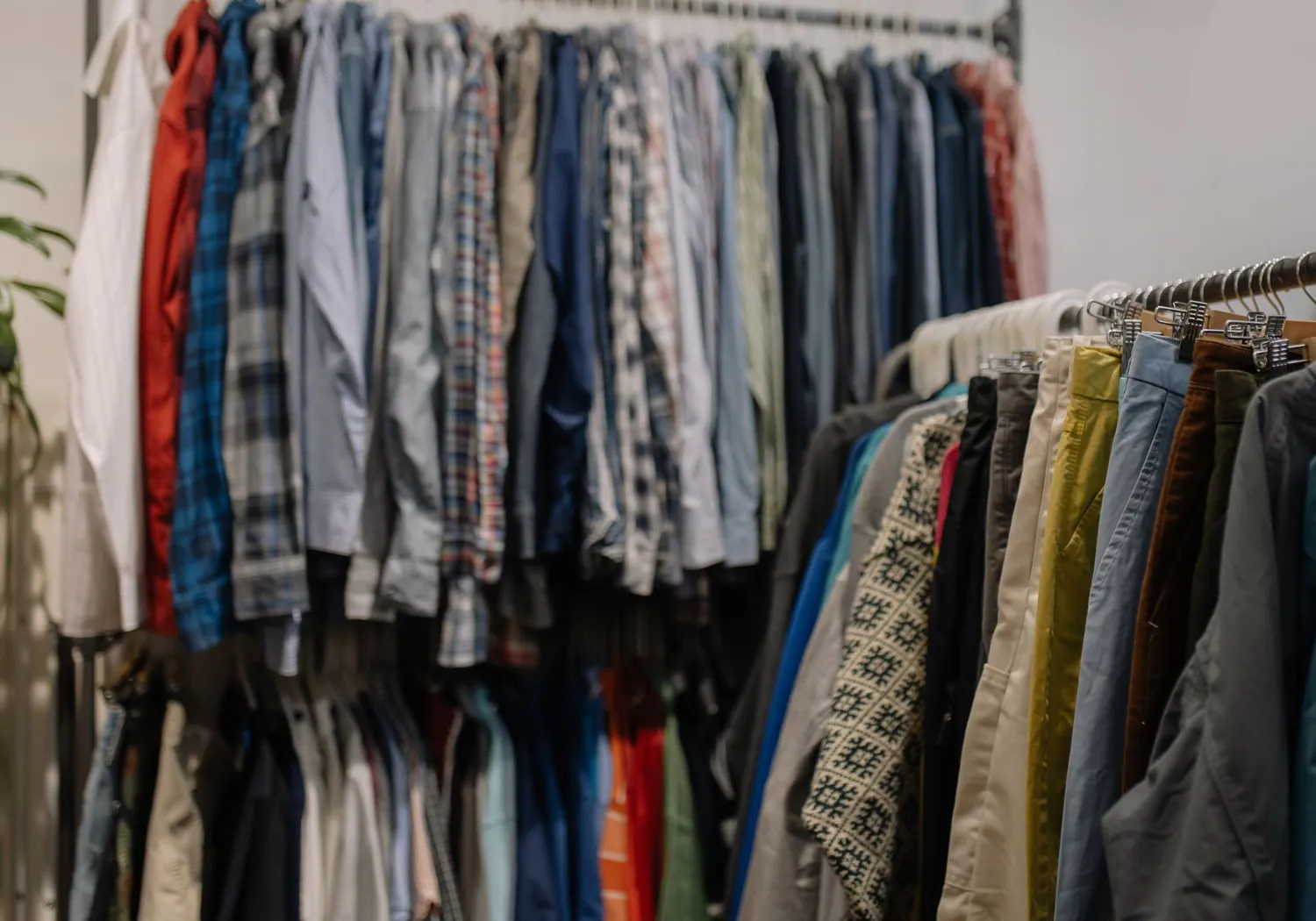
To start a second hand clothes shop on wholesale stock, settle four things before the first order: the format you are opening, the room where the goods will be sorted, one lead line, and a test batch small enough to survive a wrong guess. The rest is routine work, and you will do it better because the first batch taught you something.
New shops seldom fail for lack of stock. They run out of cash after ordering too much, and out of space once the bags arrive. Each stage below has the mistake that tends to happen there.
Pick the format you will run first
A stall, a street shop, an online shop and a discount shop all buy bags of clothing, but the plan for each is different, so choose one and write the plan for that one. Which categories suit which format is a separate decision, covered in the guide to which categories to stock. Here the question is what the format does to your workload.
A stall needs a strict first sort, because only what fits on the table and rail gets shown, and everything must travel in a van. A street shop needs enough volume to keep rails looking full, and enough back room to hold the bags that are waiting. An online shop needs time for photographs and parcels, so the hours per item rise sharply and only pieces that justify them get listed. A discount shop needs the opposite: fast sorting, low prices, very little handling per piece.
Many first-time buyers try to be a shop, a stall and an online seller at once and end up sorting for three customers with one pair of hands. Add channels later, once the first one runs without you standing over it.
Work the budget backwards from the shelf
Start the budget at the till, not at the stock. Write down what the space will cost you each month, what you will pay yourself or a helper for sorting, and what you need to buy once: rails, hangers, tables, a till, signage, a steamer, a scale. What is left is what you can spend on goods, and it is usually a smaller number than people expect.
Then add the costs between the supplier and your door: transport, border clearance, bank charges. Rates and rules depend on your country, so ask a customs agent there for actual figures, and see the article on shipping from the UK by road for how the border step works. The method for turning all of it into a cost per kilo is in the guide on calculating real profit from a load.
Check the paperwork for the shop itself too: trading registration, a lease that allows retail use, insurance for stock and for customers on the premises, and any local rules on selling used clothing. These differ between countries and cities, so ask the local authority or an accountant rather than relying on a friend in another town.
Do not spend the whole budget on the first order. The shop needs cash to reorder what sells, to fix whatever turned out wrong in the first month, and to keep running while the first rails turn into money. A shop that has put everything into the first batch can only watch the fast sellers run out.
Space and equipment for receiving and sorting
Most new shops plan the sales floor carefully and forget the back room, where the work is. A bag of Original clothing weighs 150-200 kg, and a 5,000 kg test batch is therefore between 25 and 33 bags. A full truck of about 20,000 kg is 100 to 133. Walk to the spot where they will stand and picture that many bags there. The floor should be flat, dry and clear, and a pallet truck or forklift should be able to reach it. A bag stored on damp concrete is one you will smell before you open it.
For the sorting itself you need less than you might think:
- two or three sturdy tables at working height, so nobody sorts on their knees
- four containers or marked floor areas for the piles: shelf, discount, wash or repair, waste
- a hanging or floor scale, to weigh each pile from each bag
- a clothes rail for stock ready to go out, plus hangers in bulk
- a steamer or iron, and somewhere to wash what needs it
- a notebook or spreadsheet kept at the table, not in the office
On the shop floor, light and space matter more than fixtures. A mirror near the changing area and room for two people to pass between rails will do more than a fancier wall display. Tight aisles put many shoppers off.
Choose one lead line and build around it
Clothing is the usual lead for a second hand shop, because people need it all year and replace it often. Within clothing you still have to choose. A shop for families leans toward children and everyday adult wear, a shop near a university toward casual and sportswear. Look at who walks past your door on a Tuesday afternoon, not on a Saturday.
For a first order, Original clothing is the line that matches a mixed clothing wholesale plan. It is unsorted: clothing, shoes and accessories as collected, in bags of 150-200 kg, from households (D2D) or from donation containers. The two sources may look different when opened, so ask which one is being quoted. You are buying raw material, and your own sorting turns it into stock. When you ask for the video of a lot, watch how the garments look when a bag is emptied, how mixed the contents are and how full the bags are, then compare that with what your rails would hold.
The grading words you will hear from suppliers (cream, grade A, grade B) are explained in the article on second hand clothing grades.
A common early mistake is choosing a lot on the price per kilo alone. Two lots at the same price can hold very different amounts of what your customers will buy, and a low rate on goods that do not suit your street is not a bargain. A side line such as toys or household goods can wait. At the start, one strong line and a plan beat five weak lines.
The test batch: small enough to be wrong
A standard order is one truck, about 20,000 kg. That is a lot of stock for a shop that does not yet know what its customers buy, and starting there is a frequent mistake. New customers can begin with a 5,000 kg test batch instead. It costs less to be wrong on.
Consider what a wrong truck means: more than a hundred bags to open, sort, store and sell, most of it wrong for your street. A wrong test batch is a quarter of that, and you learn from it.
Categories can be mixed on one truck, so the test batch need not be pure clothing. If you are curious about a second line, put most of the weight in the lead line and a smaller share in one other category, for instance toys or bric-a-brac. How to think about mixed loads and the packing formats is in the article on choosing a wholesale format.
Decide the pass mark before the truck arrives. For example: most of the lead line reaches the shelf, the sorting takes a number of hours you can staff, and the first rails sell at prices that cover the landed cost with room to spare. If you set the target afterwards, you will find a reason to call any result a success.
Treat the batch as an experiment with a record. Decide beforehand what you want to learn: how much of the weight reaches the shelf, which groups sell in the first weeks, how many hours the sorting took, what customers ask for and you did not have. Without notes, the test is only a smaller order.
Before you pay: quote, lot and paperwork
The price is per kg and depends on the category. It is quoted on request, so ask for it for your exact mix and destination, and compare suppliers on landed cost per kilo, not the line on the quote. Reading and comparing per-kg quotes shows what to line up.
A video of a lot is available on request, and it is worth asking for before you pay. If you are in or near London, the warehouse in West Drayton can be visited by appointment, Monday to Saturday. For the questions to put to any supplier, see the article on choosing a wholesale supplier.
Goods travel by road through logistics partners, and the road time depends on where you are: from a day or two to Dublin to four or five days to Bucharest, confirmed in each quote. Customs paperwork is the part that most often catches a new importer out. Worn clothing is usually classified under heading 6309, but toys and household goods are classified separately, and your own agent assigns the codes line by line. Ask the agent which documents and registrations you need, and agree payment terms in writing before the truck is booked. International clients pay by bank transfer.
Last, make sure someone can receive the truck: a loading bay or forklift, a person who can count bags, and a place to put them.
When the truck arrives
Keep this short and boring: count the bags against the packing list, look for torn or wet ones, and put any damage in writing on the delivery document before the driver leaves. Deadlines for claims on damage you could not see depend on the transport terms, so check them with your agent. Then get the bags under cover, off the floor and numbered. The full routine for inspecting a delivery is in the guide to quality control for wholesale orders.
One practical point belongs in the plan. Book the delivery slot and check what the carrier needs from you: opening hours of the bay, who signs, and whether a full-size lorry can reach your door at all. Unloading by hand at a kerb is slow and risky for goods and people.
Who does the work, and when
Sorting and selling compete for the same hours. A person cannot stand at the till and empty a 150 kg bag at the same time, so decide before the truck arrives who sorts, who serves, and which hours belong to which. In a one-person shop the sorting happens before opening, after closing or on the quiet day, and the opening hours should be set with that in mind.
If you plan to hire help, hire for the sorting first. It is repetitive, physical and easy to teach: show the four piles, show what counts as shelf quality, and check the first few bags together. A helper who sorts to a different standard than you will quietly change your results, so agree the standard with a few real garments in your hands, not with words.
Give the sorters a decent corner of the back room too. Bags of unsorted clothing are dusty, and a table by a window and a place to sit through long sessions keep people working better, and coming back.
Cash in the first three months
Cash goes out long before it comes in. The goods are paid for by bank transfer before or around loading, the road and the clearance follow, then comes the sorting time before the first rail is ready, then slow sales while customers learn the shop exists. Draw a simple month-by-month line with money out above and money in below, and mark the lowest point. That point, not the starting budget, tells you whether the plan is safe.
Plan for the first sales to be lower than you hope. If the shop survives the gap with money to spare, the second order can be placed from strength. If it survives only when everything goes well, the first order is too big, and the answer is a smaller test batch, not a bigger loan.
A calendar from decision to opening day
The stages above overlap, and a rough calendar helps you see where the first sale falls. Count back from the day you want to open.
Start with the decision and the space, since these take longest and cost most to change. Then the quote and the video, then payment, then loading, then the road. The road alone is from one to five days depending on destination, but clearance and delivery add time you cannot control, so keep a margin of days, not hours. After the truck arrives, count on a stretch of sorting before the first rails are ready, and more time if you are alone. Hanging, pricing and tagging come after that.
Beginners tend to plan the sorting as a day or two of work. Time the first bags with a clock and replan from the real figure, because that one number moves every date after it.
Finally, give yourself a quiet opening. A soft start with part of the stock out, a few friends and a notebook gives you the first week's information at no risk.
Opening and sorting the first bags
This is where the real cost of the stock shows. Take one bag at a time to the table, empty it, and sort into the four piles. Weigh each pile and write the numbers next to the bag number, with a line on what the bag was mostly made of.
Open several bags from different parts of the lot before you form an opinion, because one bag proves very little. The method for turning these weights into a cost per sellable kilo is in the profit guide linked above.
Two mistakes happen here. The first is expecting treasure. Used lots are mostly ordinary goods, and the money is made by moving ordinary items steadily; the occasional good find is a bonus. The second is throwing away what looks useless without weighing it. The waste pile is a cost, and you cannot judge a lot if you do not know how big it was. Ask a local textile recycler or rag buyer whether they collect, and check local rules on disposal.
Washing and presentation belong here too. Items that smell of storage or have light marks may be worth a wash or a steam before they reach the rail. A plain T-shirt at a low price does not repay a machine cycle, and a good coat usually does.
Be honest with the shelf pile. If a piece has a stain or a broken zip and you would not buy it yourself, it does not belong there. Second hand shoppers forgive wear, not damage, and one bad rail teaches them not to come back.
Pricing the first rails
Tag each group with one price. T-shirts one price, jumpers another, jackets another, kids a separate group, so a customer can read the price from the rail and you can reprice a group in one go. A different price on every piece is slow and false precision.
Set the floor first: your cost per sellable kilo tells you the least you can charge per kilo of stock. Then look outside. Charity shops, other second hand shops and market stalls in your town show what customers already pay, and your prices should sit where they expect them for that quality.
New shops underprice more often than they overprice, usually out of nerves. If everything sells on day one, the prices were probably too low. Prices can come down; raising them in front of the same customers is harder. Plan markdowns on a schedule: new stock at full price for the first weeks, a reduction after that, and the bargain bin for what is left.
Keep the price list on one page, taped near the till, with the group, the full price and the date of each markdown step. Staff and helpers then charge the same, and you can see at a glance which groups have moved to which step. When a group sells out at full price in a few days, note that too: it is the clearest signal you will get that the next order should hold more of it and that the price can rise.
Display and the first weeks of selling
Resist filling every rail on day one. A full rail looks busy but hides the pieces that deserve attention. Put the best pieces at the front and near the door, keep the rest in reserve and bring out new stock every few days, so regulars see something different each visit.
For the first two weeks, keep close notes. Write down what sells in the first days, what customers pick up and put back, what they ask for and you do not have, and which sizes run out. This is the data that tells you what to put in the next order.
Your second order
The second order should differ from the first in one way only. If you change the line, the source and the size at once, you cannot tell what caused the result. Use your notes: more of what sold quickly, less of what sat, and the same bag source until you understand how it behaves.
Time it by the calendar of your street as well as by your stock. Coats and boots sell as the weather turns and light clothing in spring, so an order for a season has to be on the shelf before it starts. Allow for the road time in your quote, the clearance, and the days of sorting. The quantity formula and the reorder checks are in the profit guide.
If the first batch went well, a second category can join the same truck. Toys and bric-a-brac each have their own sorting habits and each deserves a small trial before it gets a wall.
Moving from a test batch to a full truck is a big step. Do it when the sorting space and the sales rate are both ready for it, not when the first week felt good.
Before ordering, mark on your floor plan where twenty-five to thirty-three bags would stand, then open the Original collection page and see how the bags are packed.